
The Agreement on Truth
On Truth, Democracy and the importance of keeping a shared reality alive.

The agreement on Truth
For the past few months, I’ve been thinking about Truth. Particularly, how did we come to share a sense of what Truth means, and why is it that a lot of people, including myself, feel like there has been a shift in our relationship with it? Is there even anything that we can do to somehow repair that?
Through many different forms, communication is key to the pursuit of Truth. You want to be able to articulate it somehow, to both yourself and others. Language is the vehicle we most often use to arrive at Truth, and, as a species, we have agreed on certain conventions in order to be able to communicate: words.
Throughout our history, we have come to agree on certain words as a way to describe certain things. If you speak basic English, you know that a dog can be referred to by using the word “dog”. No matter where you are in the world, if this specific animal shows up and you’re near people who speak English, using the word “dog” will allow you to point to it. The exact situation in a different language would call for a different word, while still being true.
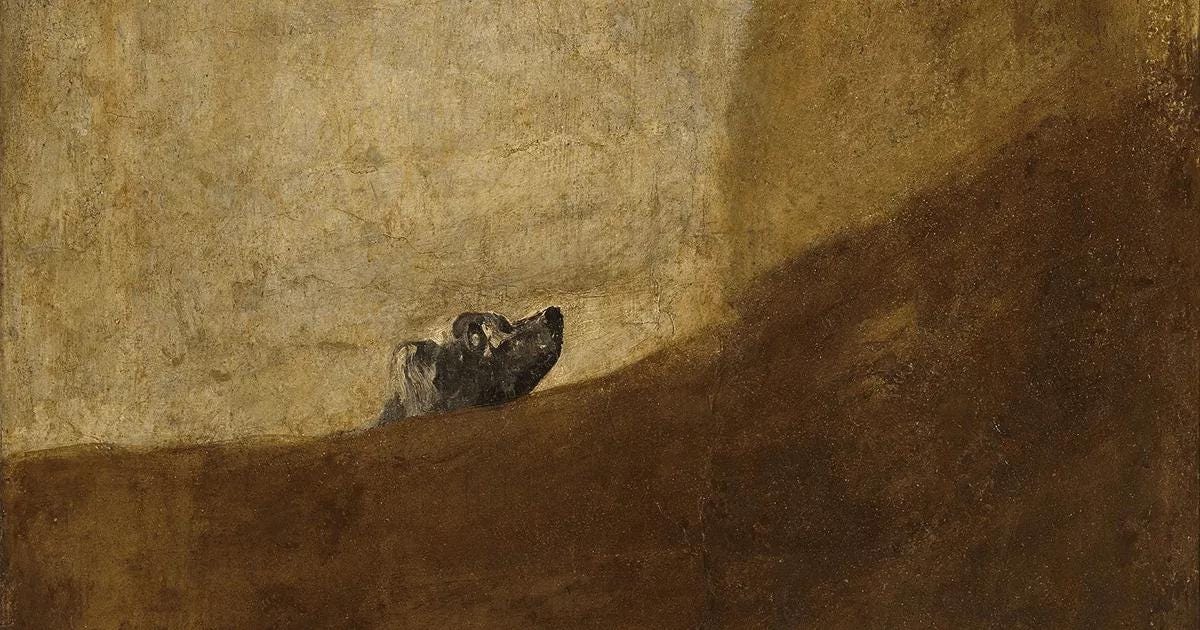
This is extremely meaningful for our truth-seeking necessity, since words compose the building blocks of ideas, and we need to agree on them to try to convey something. It’s much better to have one word directly corresponding to a single, universal meaning (within that language) than having to define words and meanings at an individual level. Can you imagine your life if you had a different word for the same thing, depending on the person you’re talking with? It would be impossible to keep track of all the different variations.
So, as a species, when communicating in the same language, we agree that certain words act as labels for things. We can only build towards meaningful discussion by building on top of these agreements. Once we do, we can use words to create statements. Statements, however, bring with them a much more complex reality since they can be true or false.
That the word “dog” is used to refer to a dog is the basis of communication. But society is held together, not by that, but by agreeing that “the dog bit the man” is checkable for either being true or false. It seems to me, however, that part of what happened over the past few years is that we’ve lost the ability to agree on things that were checkable.
People can (and should) disagree on how to articulate certain ideas, answer certain questions, or, more generally, share their perspective on things. However, it’s important to make sure that we agree that facts have happened, even if they can be interpreted in many different ways.
This, then, leads us to a fork: some truths we can settle by checking, while others we can argue about endlessly. This difference matters a lot to understand the current cultural landscape when it comes to our relationship with Truth.
What matters is what I see
For the longest time in Human History, our geography shaped our awareness of what was happening in the world. We cared only about what we could see, and what we saw were the surrounding villages. Eventually, we developed the concepts of Kingdom and Nation, and there was a whole range of new phenomena that started to be part of our perception: new tax laws, wars, or the election of a new King you had never met. Your sense of identity went from being “local-only” to being “national”. But other than national concerns, you would still be pretty much focused on the things you were able to witness firsthand. Technically, you could start a new life by moving a few villages away.
However, we’ve come a long way since then. And with all of the social, political, and technological progress, came some issues that have impacted the way we relate to truth. Compare the previous reality with the one you live in right now, with Mass Media as part of our culture.
In the current world, we are forced to know what’s happening in places you would never visit. Wars being fought in countries that you have a hard time pronouncing are as salient as those that surround you. This has been an ever-growing tendency, amplified by mass media, the internet, and social media. Today, you get to know what is happening in almost every place in the world. You can ask me to pinpoint Bangladesh on a globe, and I’ll have a hard time distinguishing it from Pakistan, but recently, I made a couple of dollars betting on the result of their election through Prediction Markets. How? I was “monitoring the situation”, reading the news, tweets, and watching videos about it.
But here’s the question I can’t seem to find an answer to: what made me follow the elections in the first place? I have no clue! It naturally emerged in my own network of information. I’m not saying that that’s a bad thing per se, but this emergence can create a world where we are overwhelmed by information and the social pressure to keep up with it, even though it’s impossible. It was somehow manageable when you only had to care about the local information. In the modern world, you’re expected to have an opinion on things that are happening in the world as a way to be part of the conversation, which is why we go from being virologists to historians of the Middle East in less than a week.
How can we cope with such a large amount of information? Short answer: we can’t. Sure, I can know what’s happening in Bangladesh well enough to make an educated guess, but I’m not able to do that and keep track of how the UK is going, why some people hate the Spanish Prime Minister, or what the next release of AI applied to medicine is. As a culture, our strategy has been developing a “mini-awareness” of events through headlines and small comments. Clickbait is as much a business strategy as a coping mechanism for information overload. I read that something happened in the Scottish parliament, not sure what. Japan now has a female prime minister, but what does she stand for? No idea!
We live in a constant state of brief, incomplete understanding of the world. Truth is complicated, nuanced, and it seems very few of us have the time for that right now. We have far more data, but our understanding isn’t better. In fact, this has led to the erosion of our relationship with Truth.
If we can argue, as I will in the next part, that our relationship with Truth has always been under some form of attack, this is a new, much more dangerous front, and I’m afraid we’re losing ground to noise, particularly in Politics.
Truth and Politics
Looking at the History of Truth, the tense relationship it has with politics is noticeable. HannahThe agreement on Truth
For the past few months, I’ve been thinking about Truth. Particularly, how did we come to share a sense of what Truth means, and why is it that a lot of people, including myself, feel like there has been a shift in our relationship with it? Is there even anything that we can do to somehow repair that?
Through many different forms, communication is key to the pursuit of Truth. You want to be able to articulate it somehow, to both yourself and others. Language is the vehicle we most often use to arrive at Truth, and, as a species, we have agreed on certain conventions in order to be able to communicate: words.
Throughout our history, we have come to agree on certain words as a way to describe certain things. If you speak basic English, you know that a dog can be referred to by using the word “dog”. No matter where you are in the world, if this specific animal shows up and you’re near people who speak English, using the word “dog” will allow you to point to it. The exact situation in a different language would call for a different word, while still being true.
This is extremely meaningful for our truth-seeking necessity, since words compose the building blocks of ideas, and we need to agree on them to try to convey something. It’s much better to have one word directly corresponding to a single, universal meaning (within that language) than having to define words and meanings at an individual level. Can you imagine your life if you had a different word for the same thing, depending on the person you’re talking with? It would be impossible to keep track of all the different variations.
So, as a species, when communicating in the same language, we agree that certain words act as labels for things. We can only build towards meaningful discussion by building on top of these agreements. Once we do, we can use words to create statements. Statements, however, bring with them a much more complex reality since they can be true or false.
That the word “dog” is used to refer to a dog is the basis of communication. But society is held together, not by that, but by agreeing that “the dog bit the man” is checkable for either being true or false. It seems to me, however, that part of what happened over the past few years is that we’ve lost the ability to agree on things that were checkable.
People can (and should) disagree on how to articulate certain ideas, answer certain questions, or, more generally, share their perspective on things. However, it’s important to make sure that we agree that facts have happened, even if they can be interpreted in many different ways.
This, then, leads us to a fork: some truths we can settle by checking, while others we can argue about endlessly. This difference matters a lot to understand the current cultural landscape when it comes to our relationship with Truth.
What matters is what I see
For the longest time in Human History, our geography shaped our awareness of what was happening in the world. We cared only about what we could see, and what we saw were the surrounding villages. Eventually, we developed the concepts of Kingdom and Nation, and there was a whole range of new phenomena that started to be part of our perception: new tax laws, wars, or the election of a new King you had never met. Your sense of identity went from being “local-only” to being “national”. But other than national concerns, you would still be pretty much focused on the things you were able to witness firsthand. Technically, you could start a new life by moving a few villages away.
However, we’ve come a long way since then. And with all of the social, political, and technological progress, came some issues that have impacted the way we relate to truth. Compare the previous reality with the one you live in right now, with Mass Media as part of our culture.
In the current world, we are forced to know what’s happening in places you would never visit. Wars being fought in countries that you have a hard time pronouncing are as salient as those that surround you. This has been an ever-growing tendency, amplified by mass media, the internet, and social media. Today, you get to know what is happening in almost every place in the world. You can ask me to pinpoint Bangladesh on a globe, and I’ll have a hard time distinguishing it from Pakistan, but recently, I made a couple of dollars betting on the result of their election through Prediction Markets. How? I was “monitoring the situation”, reading the news, tweets, and watching videos about it.
But here’s the question I can’t seem to find an answer to: what made me follow the elections in the first place? I have no clue! It naturally emerged in my own network of information. I’m not saying that that’s a bad thing per se, but this emergence can create a world where we are overwhelmed by information and the social pressure to keep up with it, even though it’s impossible. It was somehow manageable when you only had to care about the local information. In the modern world, you’re expected to have an opinion on things that are happening in the world as a way to be part of the conversation, which is why we go from being virologists to historians of the Middle East in less than a week.
How can we cope with such a large amount of information? Short answer: we can’t. Sure, I can know what’s happening in Bangladesh well enough to make an educated guess, but I’m not able to do that and keep track of how the UK is going, why some people hate the Spanish Prime Minister, or what the next release of AI applied to medicine is. As a culture, our strategy has been developing a “mini-awareness” of events through headlines and small comments. Clickbait is as much a business strategy as a coping mechanism for information overload. I read that something happened in the Scottish parliament, not sure what. Japan now has a female prime minister, but what does she stand for? No idea!
We live in a constant state of brief, incomplete understanding of the world. Truth is complicated, nuanced, and it seems very few of us have the time for that right now. We have far more data, but our understanding isn’t better. In fact, this has led to the erosion of our relationship with Truth.
If we can argue, as I will in the next part, that our relationship with Truth has always been under some form of attack, this is a new, much more dangerous front, and I’m afraid we’re losing ground to noise, particularly in Politics.
Truth and Politics
Looking at the History of Truth, the tense relationship it has with politics is noticeable. Hannah Arendt argues that this has to do with an inherent property of Truth: it tends to be impotent, whereas political power tends to be active. Politicians want to do or change something; their focus is on action. Truth, however, produces none of that. Why should we follow it, then? Because it speaks to something higher than mere action. Even in the absence of it, there’s an understanding of Truth’s power. This is why we constantly see politicians trying to control the optics used to witness the truth.
We need, then, to take a moment to understand Truth more deeply.
Arendt argues that the opposite of a rational true statement can either be error and ignorance (in Science), or illusion and opinion (in Philosophy). A child can tell you that 2+2=3 because they don’t understand the rules of Math. A person can argue that Plato’s Cave is a text about how cool shadows are on walls due to their lack of understanding of the text. This is what we’ll call Rational Truth, incorporating math, science, and philosophy. It is arguable and open to change by nature.
The other type of Truth is Factual Truth, referring to events in the past that have happened, making them beyond discussion.
Consider Ancient Greece, seen by many as the Golden Age of Philosophy. Citizens inhabited a state of ever-changing opinions on human affairs, whereas philosophers pursued the everlasting problems and themes. Both groups accepted Factual Truth: they didn’t differ in what had happened.
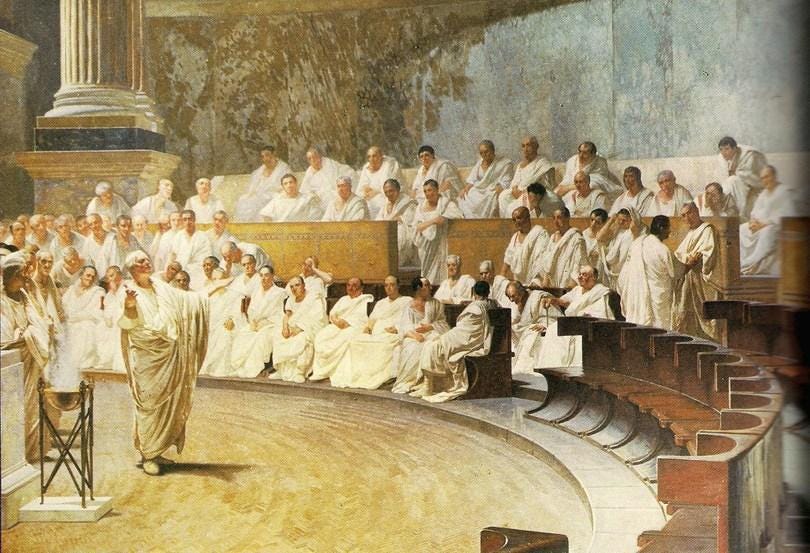
Above that particular layer of reality, they parted ways: philosophers chased Rational Truth through dialogue, whereas citizens lived in Opinion, a more practical but shallower view of the world. To philosophers, Opinions were the opposite of Truth, an illusion. And yet Opinion, not Truth, was what mattered to politicians, because it is the indispensable prerequisite for power in the game of politics.
Truth inhabits philosophy, born and shared through dialogue; Opinion inhabits rhetoric, living through the demagogue who convinces people to think a certain way.
So from the very beginning, there was a tension between Truth and Politics. However, things got worse as we went through some societal changes. If we look at a lot of the current political discourse, we find many instances where solid reasoning is pushed to the side, while strength of opinion gets chosen as the de facto winner. It’s not about how clear your thinking has become when it comes to the interpretation of what happened, but how many people believe in your view. Even if you completely dismiss facts.
This showcases an ongoing, negative paradigm shift. Disturbingly, unwelcome facts are now perceived as opinions, which is a fundamental change in the way we organize the world.
Our Civilization is built upon the ability to disagree about interpretations of what happened and what should happen, always starting from a place of shared reality. If there’s no solid ground, if nothing is rooted in Truth, how can we find meaning? Facts are solid, but if everything is an opinion, everything becomes liquid, as Bauman would point out. If suddenly a fact stops being a fact and gets dismissed as a “fleeting” opinion, then we lose shared context. There’s no solid basis to root our dialogue in. Rational Truth may be ever-evolving by nature. But Factual Truth is supposed to be the bedrock of discourse. The modern world, however, has blended these two types of Truth and sees them as equal.
Factual Truth, when exposed to the “marketplace of ideas,” is no longer countered by lies, which would allow an obvious dismissal, but by opinions, which have much more space to survive. This is extremely dangerous. Facts and opinions are not the same. One fact can lead to multiple opinions, which, inspired by different passions, can be widely different from one another and still have some legitimacy because they’re rooted in Factual Truth. What’s “right” may depend on individual morality, but it has a direct tie to “the thing” that has happened. Freedom of Opinion is important and built upon the premise of shared understanding that extends beyond itself. Maybe it’s time to wonder if we have spent too much time carrying a false sense of security around Factual Truth.
We saw it as indestructible, but are now realizing that’s not the case at all, especially for political thought. How many people share your beliefs should be irrelevant when pondering what is true, since persuasion is useless against Truth. After all, Truth is coercive, not persuasive. And yet, our relationship with it has changed. To some people, facts are no longer beyond agreement or consent.
Truth didn’t stopped being coercive, but we’ve stopped treating it that way.
Unwelcome opinions can be argued against and even rejected, but unwelcome facts don’t. It used to be the case that, if you were rejecting a fact, you would be lying. But now, we’re talking about a mere opinion. People who deny factual truth are no longer liars, but simple “opinionated” people. This created a corruption of our public discourse. Factual Truth should preclude Debate, even if political life depends on it. But this has changed, and now we must wonder what to do to fix this.
My answer is two-fold: 1) we must call out those who refuse Factual Truth, and 2) we must improve our own opinions drastically.
We improve opinions by starting with Facts and deriving as many opinions and interpretations as we can. The more angles we can use to observe the issue, the better our interpretation is going to be. After all, the quality of an opinion can be correlated with the degree of impartiality, which, in itself, can be widely affected by melding and considering different perspectives. This allows you to have a logical chain of thought that supports a certain opinion that is rooted in Truth.
Truth has no conclusive reason to be what it is; it just is. But because it’s no more self-evident than a poorly formed opinion, it is easy for opinion holders to see it as being on the same level as their own ideas. This is particularly concerning in politics.
The moment that a series of facts gets thrown into the political arena, they’re inhabiting an interpretive context. If someone lies about something to disagree with something that is factual Truth, it can be interpreted, in the political realm, as the right to have an opinion. At the same time, if someone cares deeply about Factual Truth and finds themselves in a political context where they’re expected to perform political action, they lose credibility and the incentives to do the right thing. It’s hard to be a Truth-teller and a man of action, whereas liars need no accommodation since they’re actors by nature, using their influence to create something.
Even lying itself has gone through a process of change. It used to be a way to counter Truth. Now it seeks to destroy it and replace it with something different.
Our modern politics are so broken that self-deception has become indispensable for politicians. To a point where Liars start to believe their own lies, not to deceive others, but because it helps them see their opinion as Truth. If you’re a politician who deeply believes his own conspiracy theory, you have the moral excuse to act in any way you see fit. It’s a survival mechanism.
Politics still frowns upon direct lying, but tolerates extreme self-deception. When you go through a complicated process of creating an illusion of alternative truth, filled with lies, nothing is stopping you from seeing it as Factual Truth and “implementing it” as such. This is what’s happening in many places in the world today.
We used to see institutions as key figures in allowing this exact situation to not happen, defaulting to seeing them as vehicles for Truth and Trust.
But what’s happening with institutions today?
Truth and Institutions
The Human relationship with Truth is deeply influenced in Western Culture by a given number of institutions that we deem as sources of it. The journey of Men is the journey of Truth uncovered and shared through the proper institutions of any given time, even if our notion of it has varied between factual and philosophical, across historical epochs.
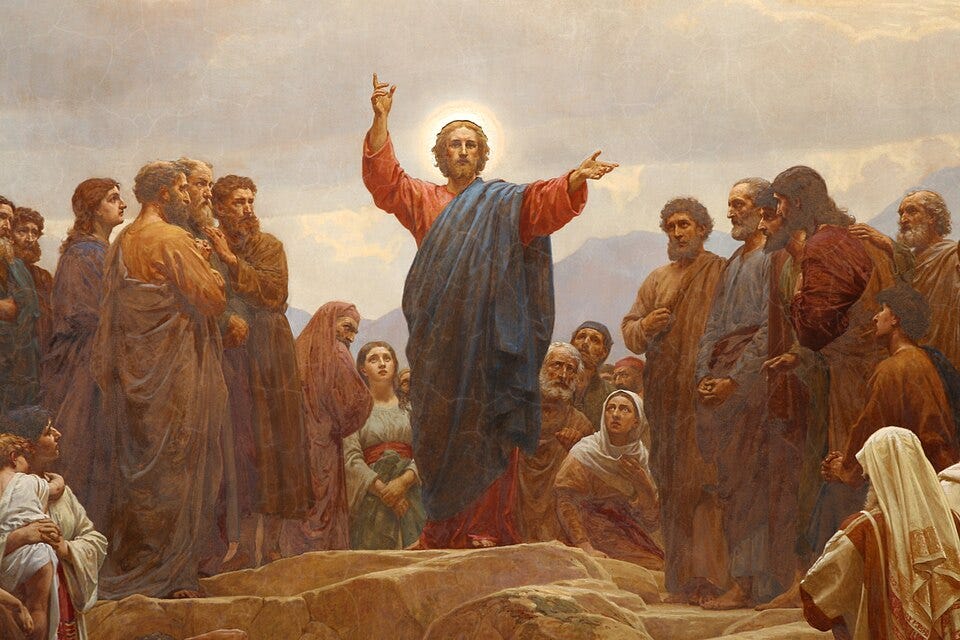
One of the strongest ones has been the Catholic Church as a source of Truth. Both Factual and Philosophical truth were tied to what the Church said. As we developed as a species, with progress and discoveries, we found a way to understand the world around us in a more empirical way. This empirical view led to an abandonment of the Church as a source of Factual Truth, impacting even Philosophical Truth. There are, however, a lot of places where the Church still holds a big grip on what Truth is, either through cultural resonance or, as Antonia Cundy uncovers in her podcast, through systemic narrative-shaping. Reasons aside, for most people, the grasp that the Church had on Truth, especially Factual Truth, is much looser.
A second alternative naturally emerged throughout History - a more empirical view of the world: Science.
For a long time, science was the biggest source of Truth. Nietzsche even argued that science had not so much dethroned religion but took the throne for itself; after all, our faith in scientific truth grew from an unconditional “will to truth” that used to sustain our faith in God.
Science is directly tied to modern education and Universities, institutions where Truth plays a major role. For the last few decades, we’ve had all sorts of phenomenal scientific discoveries, helping us expand and clarify our own sense of Factual Truth. And even if there’s a lot of great research still happening, it’s also true that Academia and Science are facing a crisis on their own.
Currently, in a lot of academic research, we’re facing a replication crisis: instances where evidence from scientific papers can’t be replicated by other people. This involves cherry-picking by some researchers and pure fraud by others, with Alzheimer’s and the Amyloid hypothesis being the most shocking case. A lot of institutions now host fraudulent researchers and are often slow and reluctant to hold them accountable. Universities seem to be becoming more biased, and the process of innovation in these institutions is beyond slow, with a lot of researchers working on an ever more specific pursuit instead of attempting to pursue ground-breaking knowledge. Continuation, not innovation, is the order of the day.
The Pursuit of Truth is one of the noblest callings a human being can have. What does it say about the modern world if the institutions that were designed literally with the single purpose of doing it are now being desecrated by people committing fraud?
The third and last institution I want to reference is Media, in its many forms. Newspapers, radio, and Television, until a given point, were seen as the best sources of Factual Truth. But the more you look into how these institutions have worked, the people behind them, and the different incentives, you easily question the current level of Factual Truth present in their broadcasts. The recent show “Dynasty: The Murdochs” is a great example of some of the “legacy media” approaches to journalism. Still, to this day, Legacy Media, regardless of influence, distortions, false claims, and misinterpretations, is seen by A LOT of people as the last bastion of Factual Truth by a reliable institution.
But that changes every day, with the increase of reputation that we’re given to social media and the people who post there. To a lot of people, Social Media websites have as much credibility (sometimes, even more) as regular media as sources of Factual Truth. Feeling played by “old-school media”, they’ve turned their attention to a new way of doing things. And if, on one side, it is true that the internet and social media have a series of great communities and accounts making a great effort to share Factual Truth, most of it is slop designed to get clicks. With the rise of AI-generated content, things will get even worse.
I think it’s fair to assume that a lot of people feel desperate for good sources of information. If most people think of Truth as mere Opinion, as we’ve seen before, then the necessity to have “survivors” who focus on Factual Truth, no matter how hard it is, is of utmost importance. Even if it comes at an economic downside, we must protect the sources that try to fight this huge decrease in quality.
If we have no source to trust and everything is true, then nothing is. And if nothing is, we lose the frame of reference that I’ve mentioned before, with people adapting their own “mechanisms” such as being distrustful of every single source or seeing truth in everything they consume.
Now, I want to be clear that I know this is an overstatement. I don’t think most people are that extreme in their relationship with the truth. But I do think the percentage is growing, more and more.
The subset of people who actually care about having the best sources of Truth spends a lot of time finding other people and institutions who do the same. But it’s no easy task.
Trying to fight this, one of my personal heuristics has been speaking to people who take their thinking seriously and share this desire for better information, and find both ideas and institutions that I have a hard time putting in a box. Usually, that’s a good sign that they care about ideas that challenge different sides, which makes it closer to my own conception of both Philosophical and Factual Truth.
My other perspective has been thinking about actionable things we can adopt at a massive scale to develop this desire for a shared understanding of Factual Truth and an openness to different perspectives on Philosophical Truth.
What can we do?
One of the frameworks my students learn about is called “The Red Queen Hypothesis”, proposed by Leigh Van Valen, inspired by Lewis Caroll’s “Through the Looking-Glass”, the sequel to “Alice in Wonderland”.
There’s a specific passage where Alice and the Red Queen start running as fast as they can, only to end up in the same place. This is what Alice says:
“Well, in our country,” said Alice, still panting a little, “you’d generally get to somewhere else—if you ran very fast for a long time, as we’ve been doing.”
“A slow sort of country!” said the Queen. “Now, here, you see, it takes all the running you can do, to keep in the same place. If you want to get somewhere else, you must run at least twice as fast as that!”
To understand Van Valen’s theory, you need to understand the bolded part. As a Biologist, looking at multiple data, he argued that in order for a species to merely survive against other organisms, they must keep evolving to adapt to their environment. In other words: if you stop improving, you die.
This hypothesis has leaked into many realms beyond Biology, being used to describe all sorts of phenomena, from social structures to any kind of competitive system. This same principle can (and should) be applied to Democracy. It takes a lot of work to make sure that the classic liberal principles and true democracy are alive and able to survive alternatives. It takes a lot of work to make sure we understand the difference between Truth and Opinion, between facts and perspectives. But if we get comfortable for a long enough time, assuming that these things are just “part of the human experience”, problems start to emerge.
People seem surprised by the behaviours practiced by people and politicians on both ends of the spectrum. The distortion of Truth, the sudden acceptance of reduced freedom and concentrated control, the innocent view of governmental models...The reason why they’re surprised is that they fail to realize that there is work to be done just to make sure that these things survive. And we can’t honestly claim we’ve been putting in the work.
A big part of this, as many people have mentioned in the past, is related to the impact that both the internet and smartphones have had on our culture. Only in the future, with the benefit of hindsight, will we be able to look back and reflect on the transformative changes we underwent because of them. A lot of social media websites are engineered to exploit our reward systems, making use of our desire for dopamine. We’re jumping to conclusions faster than ever. We ignore the need for a more informed perspective and allow ourselves to get drawn to more extreme positions. A lot of people lack a sense of ownership and agency over their own thinking, and miscalculate the real-world reactions to online-only behaviour.
It is really hard to try and come up with a single answer to the question: “What does an alternative to that look like?,” and this post is not an attempt at clarifying, but a showcase of the problem and an open question to everyone who may have an answer.
So far, there are two things I find can help us increase our openness to different Philosophical Truths and increase our desire for Factual Truth: books and conversations.
I know it may seem too simple, but often, the most durable response to a complex problem is a simple practice. I’ll make a case for each.
Truth and Books
A couple of months ago, I heard Dominic Sandbrook make a great point on the relationship between Books and Democracy.
The first thing he mentions is that mass literacy is something fairly recent. In some places, a “text-based world” has been a very recent phenomenon that’s already being put in question by the internet and an “image-based” one. However, it seems we’ve taken the role of literacy for granted, with more and more people seeing reading as a “waste of time”. Sandbrook draws a comparison that helps us understand why we should read more and how the lack of reading may be directly connected with Democracy surviving the Red Queen Hypothesis.
When reading a novel or a piece of fiction, you get to temporarily inhabit this world. By having an “out-of-body experience”, your worldview gets intertwined with that of the character you’re reading about. This constant contact with different points of view is a great way to increase your ability to be open to different perspectives and practice Philosophical Truth. Sandbrook wonders how much the decline of that particular experience due to a lack of reading has affected our relationship with Democracy. Not only due to our lack of different ideas but also through a change in what we believe being a human is. A part of our cultural evolution became tied to storytelling and how it moves us to change the environment. If you read from different points of view, does that influence the foundational democratic principles of accepting others as they are? Is the abandonment of Fiction leading us towards a society where democratic practices are put into question?
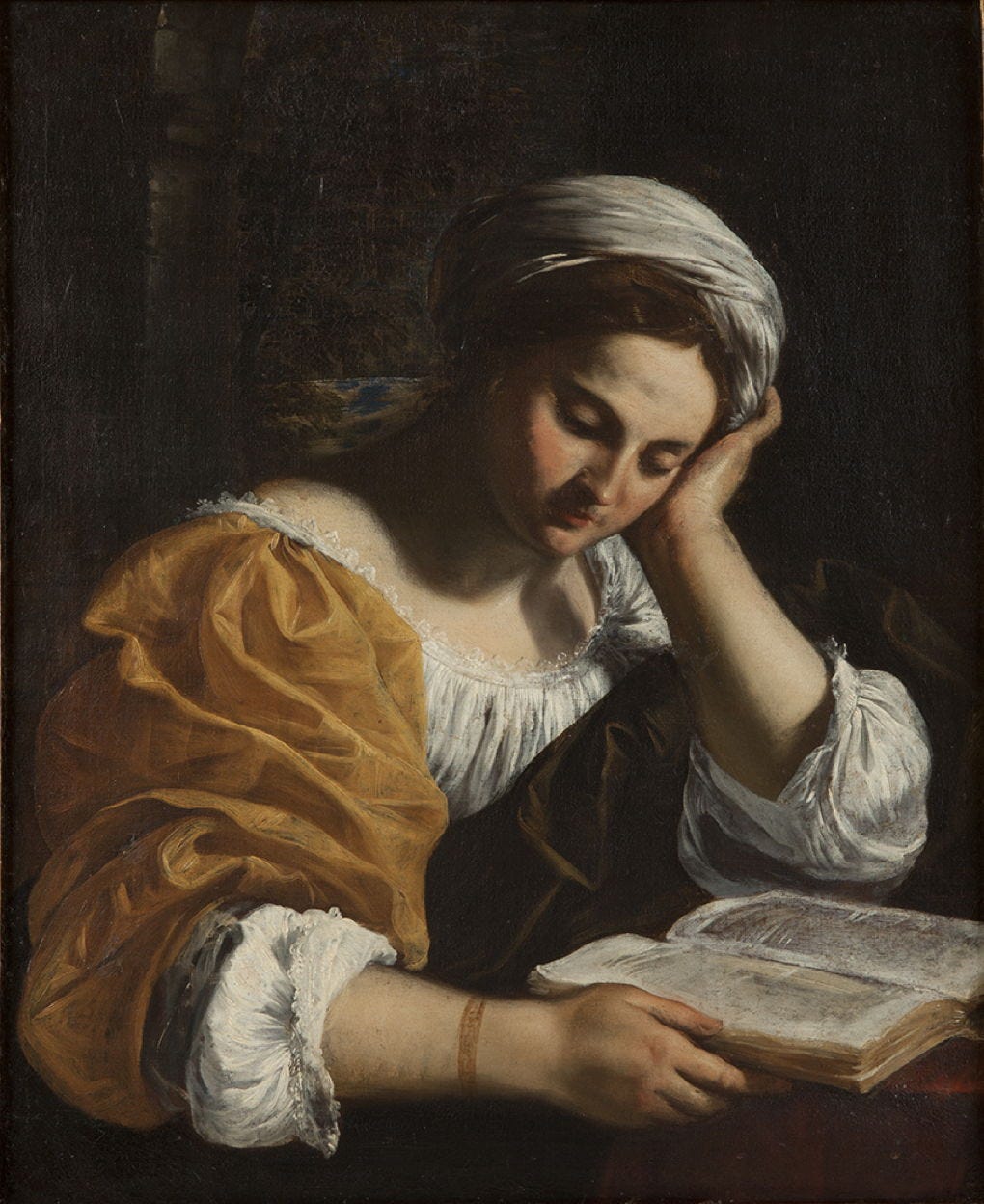
My friend Anna wrote a beautiful piece on increasing your own reading capacity, which you can read here. Reading is a fundamental practice for our world. First, through fiction, and then through non-fiction, and what it allows: a private change of mind.
When reading by yourself, you’re less prone to having your ego influence how you react to new, contrary information. If you’re trying to figure out Truth purely by conversation, whenever you find people who believe you’re wrong, there’s a chance you’ll get defensive. However, when you’re reading something, there’s no one confronting you, and if you become aware of something that fundamentally changes your beliefs, you’re not “giving in” to anyone else, or “losing” a discussion. Because they’re consumed individually, books have an easier time showing you new Factual and Philosophical Truths.
Now, of course, a book can’t argue back. There are many things it can’t do, and it’s not a process that works every time. But it is, indeed, a step in the right direction, albeit a “solo” one. But if you’re high in openness, you can try to focus on finding Truth through conversation.
Truth and Conversation
I’ve said before that it is really hard to have concrete solutions for this problem, inviting you, the reader, to please suggest yours. But other than books, I think the other venue for Truth-Seeking and expanding your own openness to Truth is conversation. I am aware I argued for the opposite point just a few sentences ago, but let me try to harmonize both things.
Being changed individually by a given source offers no ego-resistance. You have your own beliefs, and maybe you struggle through it, but if the book is good enough, you’ll face very little resistance. Conversation invites you to change WITH resistance present.
Is this much harder? Yes. But it’s the only option that builds a communal shared truth, in a way that books may struggle with.
By talking with other people and wondering together about something, there’s a process of self-discovery for both parties. In a way, Truth is no longer something abstract and becomes something that resonates with the people in front of you. It’s something shared, and because of it, your relationship with it changes.
I work in a school where the main focus is Dialogue. I’ve seen countless times, three types of students:
1. The students who fail at suspending their own beliefs believe they have Truth figured out and that there’s little room to improve on their own perception. They bring their own set of assumptions, beliefs, and experiences, having a hard time considering both Philosophical and Factual Truth that contradicts their own perception.
2. Students who are very good at setting aside their own beliefs temporarily as a way to understand a different perspective. These students don’t fully agree with someone else’s view, but are just collecting more data to complement their own puzzle.
3. Students who suspend their own beliefs and, together with other peers, consider different perspectives and, after filtering the different information, actually change their minds based on stronger arguments. Not only that, but in conversation, instead of negotiating, these students will either surface or correct the facts.
This particular ability is a fundamental skill to have in our age where, as I’ve argued, facts seem negotiable and loose while clinging to one’s own opinion seems unquestionable, almost set in stone. Through conversation, we uncover and clarify our own relationship with Truth, making us better humans.
Closing words
Let’s go back to the beginning.
We did once share a sense of truth and it slowly has been slipping, due mostly due to information overload, the politics of opinion-over-facts and the collapse of institutional trust. We can repair it, but we must consciously decide to do so. The opposite choice is to see our current understanding of society being eaten by outside forces. Reading books and having deep conversations, working on our openness to different perspectives while valuing facts above opinions is our own running to stay in place. Democracy and a shared reality don’t maintain themselves independently. We must keep them alive by doing the work.
People will have a tendency to engage in one of two destructive modes: force and dissolve. The former will focus on forcing a sense of Truth on orders without the actual structure to support it whereas the latter will focus on dissolving everything into yet “another questionable source”. Genuine engagement with ideas is our alternative to both modes.
If you’re able to make someone reason, you’ll get closer to having them understand the importance of Truth and how, no matter how much you believe something, Factual Truth is coercive and inhabits a space outside of their own beliefs. You can’t make someone learn, but you can help them to think. Forcing or dissolving Truth wont’ work, thinking will.
We must do our part in building this shared reality, a solid ground upon which we can stand together and derive our opinions from; the ground that makes disagreement productive, instead of corrosive.
Restoring our relationship with Truth is a precondition to a Modern Golden Age and it’s time to focus on that. Arendt argues that this has to do with an inherent property of Truth: it tends to be impotent, whereas political power tends to be active. Politicians want to do or change something; their focus is on action. Truth, however, produces none of that. Why should we follow it, then? Because it speaks to something higher than mere action. Even in the absence of it, there’s an understanding of Truth’s power. This is why we constantly see politicians trying to control the optics used to witness the truth.
We need, then, to take a moment to understand Truth more deeply.
Arendt argues that the opposite of a rational true statement can either be error and ignorance (in Science), or illusion and opinion (in Philosophy). A child can tell you that 2+2=3 because they don’t understand the rules of Math. A person can argue that Plato’s Cave is a text about how cool shadows are on walls due to their lack of understanding of the text. This is what we’ll call Rational Truth, incorporating math, science, and philosophy. It is arguable and open to change by nature.
The other type of Truth is Factual Truth, referring to events in the past that have happened, making them beyond discussion.
Consider Ancient Greece, seen by many as the Golden Age of Philosophy. Citizens inhabited a state of ever-changing opinions on human affairs, whereas philosophers pursued the everlasting problems and themes. Both groups accepted Factual Truth: they didn’t differ in what had happened.
Above that particular layer of reality, they parted ways: philosophers chased Rational Truth through dialogue, whereas citizens lived in Opinion, a more practical but shallower view of the world. To philosophers, Opinions were the opposite of Truth, an illusion. And yet Opinion, not Truth, was what mattered to politicians, because it is the indispensable prerequisite for power in the game of politics.
Truth inhabits philosophy, born and shared through dialogue; Opinion inhabits rhetoric, living through the demagogue who convinces people to think a certain way.
So from the very beginning, there was a tension between Truth and Politics. However, things got worse as we went through some societal changes. If we look at a lot of the current political discourse, we find many instances where solid reasoning is deemed to the side, while strength of opinion gets chosen as the de facto winner. It’s not about how clear your thinking has become when it comes to the interpretation of what happened, but how many people believe in your view. Even if you completely dismiss facts.
This showcases an ongoing, negative paradigm shift. Disturbingly, unwelcome facts are now perceived as opinions, which is a fundamental change in the way we organize the world.
Our Civilization is built upon the ability to disagree about interpretations of what happened and what should happen, always starting from a place of shared reality. If there’s no solid ground, if nothing is rooted in Truth, how can we find meaning? Facts are solid, but if everything is an opinion, everything becomes liquid, as Bauman would point out. If suddenly a fact stops being a fact and gets dismissed as a “fleeting” opinion, then we lose shared context. There’s no solid basis to root our dialogue in. Rational Truth may be ever-evolving by nature. But Factual Truth is supposed to be the bedrock of discourse. The modern world, however, has blended these two types of Truth and sees them as equal.
Factual Truth, when exposed to the “marketplace of ideas,” is no longer countered by lies, which would allow an obvious dismissal, but by opinions, which have much more space to survive. This is extremely dangerous. Facts and opinions are not the same. One fact can lead to multiple opinions, which, inspired by different passions, can be widely different amongst each other and still have some legitimacy because they’re rooted in Factual Truth. What’s “right” may depend on individual morality, but it has a direct tie to “the thing” that has happened. Freedom of Opinion is important and built upon the premise of shared understanding that extends beyond itself. Maybe it’s time to wonder if we have spent too much time carrying a false sense of security around Factual Truth.
We saw it as indestructible, but are now realizing that’s not the case at all, especially for political thought. How many people share your beliefs should be irrelevant when pondering what is true, since persuasion is useless against Truth. After all, Truth is coercive, not persuasive. And yet, our relationship with it has changed. To some people, facts are no longer beyond agreement or consent.
Truth didn’t stop being coercive, but we’ve stopped treating it that way.
Unwelcome opinions can be argued against and even rejected, but unwelcome facts don’t. It used to be the case that, if you were rejecting a fact, you would be lying. But now, we’re talking about a mere opinion. People who deny factual truth are no longer liars, but simple “opinionated” people. This created a corruption of our public discourse. Factual Truth should preclude Debate, even if political life depends on it. But this has changed, and now we must wonder what to do to fix this.
My answer is two-fold: 1) we must call out those who refuse Factual Truth, and 2) we must improve our own opinions drastically.
We improve opinions by starting with Facts and deriving as many opinions and interpretations as we can. The more angles we can use to observe the issue, the better our interpretation is going to be. After all, the quality of an opinion can be correlated with the degree of impartiality, which, in itself, can be widely affected by melding and considering different perspectives. This allows you to have a logical chain of thought that supports a certain opinion that is rooted in Truth.
Truth has no conclusive reason to be what it is; it just is. But because it’s no more self-evident than a poorly formed opinion, it is easy for opinion holders to see it as being on the same level as their own ideas. This is particularly concerning in politics.
The moment that a series of facts gets thrown into the political arena, they’re inhabiting an interpretive context. If someone lies about something to disagree with something that is factual Truth, it can be interpreted, in the political realm, as the right to have an opinion. At the same time, if someone cares deeply about Factual Truth and finds themselves in a political context where they’re expected to perform political action, they lose credibility and the incentives to do the right thing. It’s hard to be a Truth-teller and a man of action, whereas liars need no accommodation since they’re actors by nature, using their influence to create something.
Even lying itself has gone through a process of change. It used to be a way to counter Truth. Now it seeks to destroy it and replace it with something different.
Our modern politics are so broken that self-deception has become indispensable for politicians. To a point where Liars start to believe their own lies, not to deceive others, but because it helps them see their opinion as Truth. If you’re a politician who deeply believes his own conspiracy theory, you have the moral excuse to act in any way you see fit. It’s a survival mechanism.
Politics still frowns upon direct lying, but tolerates extreme self-deception. When you go through a complicated process of creating an illusion of alternative truth, filled with lies, nothing is stopping you from seeing it as Factual Truth and “implementing it” as such. This is what’s happening in many places in the world today.
We used to see institutions as key figures in allowing this exact situation to not happen, defaulting to seeing them as vehicles for Truth and Trust.
But what’s happening with institutions today?
Truth and Institutions
Human relationship with Truth is deeply influenced in Western Culture by a given number of institutions that we deem as sources of it. The journey of Men is the journey of Truth uncovered and shared through the proper institutions of any given time, even if our notion of it has varied between factual and philosophical, with a lot of nuance and historical epoch.
One of the strongest ones has been the Catholic Church as a source of Truth. Both Factual and Philosophical truth were tied to what the Church said. As we developed as a species, with progress and discoveries, we found a way to understand the world around us in a more empirical way. This empirical view led to an abandonment of the Church as a source of Factual Truth, impacting even Philosophical Truth. There are, however, a lot of places where the Church still holds a big grip on what Truth is, either through cultural resonance or, as Antonia Cundy uncovers in her podcast, through systemic narrative-shaping. Reasons aside, for most people, the grasp that the Church had on Truth, especially Factual Truth, is much looser.
A second alternative naturally emerged throughout History - a more empirical view of the world: Science.
For a long time, science was the biggest source of Truth. Nietzsche even argued that science had not so much dethroned religion but took the throne for itself; after all, our faith in scientific truth grew from an unconditional “will to truth” that used to sustain our faith in God.
Science is directly tied to modern education and Universities, institutions where Truth plays a major role. For the last few decades, we’ve had all sorts of phenomenal scientific discoveries, helping us expand and clarify our own sense of Factual Truth. And even if there’s a lot of great research still happening, it’s also true that Academia and Science are facing a crisis of their own.
Currently, in a lot of academic research, we’re facing a replication crisis: instances where evidence from scientific papers can’t be replicated by other people. This assumes, cherry-picking for some researchers and pure fraud by others, with Alzheimer's and the Amyloid hypothesis being the most shocking case. A lot of institutions now host fraudulent researchers and are often slow and reluctant to hold them accountable. Universities seem to be becoming more biased, and the process of innovation in these institutions is beyond slow, with a lot of researchers working on an ever more specific pursuit instead of attempting to pursue ground-breaking knowledge. Continuation, not innovation, is the word of order.
The Pursuit of Truth is one of the noblest callings a human being can have. What does it say about the modern world if the institutions that were designed literally with the single purpose of doing it are now being desecrated by people committing fraud?
The third and last institution I want to reference is Media, in its many forms. Newspapers, radio, and Television, until a given point, were seen as the best sources of Factual Truth. But the more you look into how these institutions have worked, the people behind them, and the different incentives, you easily question the current level of Factual Truth present in their broadcasts. The recent show “Dynasty: The Murdochs” is a great example of some of the “legacy media” approaches to journalism. Still, to this day, Legacy Media, regardless of influence, distortions, false claims, and misinterpretations, is seen by A LOT of people as the last bastion of Factual Truth.
But that changes every day, with the increasing reputation of social media and the people who post there. To a lot of people, Social Media websites have as much credibility (sometimes, even more) as regular media as sources of Factual Truth. Feeling played by “old-school media”, they’ve turned their attention to a new way of doing things. And if, on one side, it is true that the internet and social media have a series of great communities and accounts making a great effort to share Factual Truth, most of it is slop designed to get clicks. With the rise of AI-generated content, things will get even worse.
I think it’s fair to assume that a lot of people feel desperate for good sources of information. If most people think of Truth as mere Opinion, as we’ve seen before, then the necessity to have “survivors” who focus on Factual Truth, no matter how hard it is, is of utmost importance. Even if it comes at an economic downside, we must protect the sources that try to fight this huge decrease in quality.
If we have no source to trust and everything is true, then nothing is. And if nothing is, we lose the frame of reference that I’ve mentioned before, with people adapting their own “mechanisms” such as being distrustful of every single source or seeing truth in everything they consume.
Now, I want to be clear that I know this is an overstatement. I don’t think most people are that extreme in their relationship with the truth. But I do think the percentage is growing, more and more.
The subset of people who actually care about having the best sources of Truth spends a lot of time finding other people and institutions who do the same. But it’s no easy task.
Trying to fight this, one of my personal heuristics has been speaking to people who take their thinking seriously and share this desire for better information, and find both ideas and institutions that I have a hard time putting in a box. Usually, that’s a good sign that they care about ideas that challenge different sides, which makes it closer to my own conception of both Philosophical and Factual Truth.
My other perspective has been thinking about actionable things we can adopt at a massive scale to develop this desire for a shared understanding of Factual Truth and an openness to different perspectives on Philosophical Truth.
What can we do?
One of the frameworks my students learn about is called “The Red Queen Hypothesis”, proposed by Leigh Van Valen, inspired by Lewis Caroll’s “Through the Looking-Glass”, the sequel to “Alice in Wonderland”.
There’s a specific passage where Alice and the Red Queen start running as fast as they can, only to end up in the same place. This is what Alice says:
“Well, in our country,” said Alice, still panting a little, “you’d generally get to somewhere else—if you ran very fast for a long time, as we’ve been doing.”
“A slow sort of country!” said the Queen. “Now, here, you see, it takes all the running you can do, to keep in the same place. If you want to get somewhere else, you must run at least twice as fast as that!”
To understand Van Valen’s theory, you need to understand the bolded part. As a Biologist, looking at multiple data, he argued that in order for a species to merely survive against other organisms, they must keep evolving to adapt to their environment. In other words: if you stop improving, you die.
This hypothesis has leaked into many realms beyond Biology, being used to describe all sorts of phenomena, from social structures to any kind of competitive system. This same principle can (and should) be applied to Democracy. It takes a lot of work to make sure that the classic liberal principles and true democracy are alive and able to survive alternatives. It takes a lot of work to make sure we understand the difference between Truth and Opinion, between facts and perspectives. But if we get comfortable for a long enough time, assuming that these things are just “part of the human experience”, problems start to emerge.
People seem surprised by the behaviours practiced by people and politicians on both ends of the spectrum. The distortion of Truth, the sudden acceptance of reduced freedom and concentrated control, the innocent view of governmental models...The reason why they’re surprised is that they fail to realize that there is work to be done just to make sure that these things survive. And we can’t honestly claim we’ve been putting in the work.
A big part of this, as many people have mentioned in the past, is related to the impact that both the internet and smartphones have had on our culture. Only in the future, with the benefit of hindsight, will we be able to look back and reflect on the transformative changes we underwent because of it. A lot of social media websites are engineered to exploit our reward systems, making use of our desire for dopamine. We’re jumping to conclusions faster than ever. We ignore the need for a more informed perspective and allow ourselves to get drawn to more extreme positions. A lot of people lack a sense of ownership and agency over their own thinking, and miscalculate the real-world reactions to online-only behaviour.
It is really hard to try and come up with a single answer to the question: “What does an alternative to that look like?,” and this post is not an attempt at clarifying, but a showcase of the problem and an open question to everyone who may have an answer.
So far, there are two things I find can help us increase our openness to different Philosophical Truths and increase our desire for Factual Truth: books and conversations.
I know it may seem too simple, but often, the most durable response to a complex problem is a simple practice. I’ll make a case for each.
Truth and Books
A couple of months ago, I heard Dominic Sandbrook make a great point on the relationship between Books and Democracy.
The first thing he mentions is that mass literacy is something fairly recent. In some places, a “text-based world” has been a very recent phenomenon that’s already being put in question by the internet and an “image-based” one. However, it seems we’ve taken the role of literacy for granted, with more and more people seeing reading as a “waste of time”. Sandbrook draws a comparison that helps us understand why we should read more and how the lack of reading may be directly connected with Democracy surviving the Red Queen Hypothesis.
When reading a novel or a piece of fiction, you get to temporarily inhabit this world. By having an “out-of-body experience”, your worldview gets intertwined with that of the character you’re reading about. This constant contact with different points of view is a great way to increase your ability to be open to different perspectives and practice Philosophical Truth. Sandbrook wonders how much the decline of that particular experience due to a lack of reading has affected our relationship with Democracy. Not only due to our lack of different ideas but also through a change in what we believe being a human is. A part of our cultural evolution became tied to storytelling and how it moves us to change the environment. If you read from different points of view, does that influence the foundational democratic principles of accepting others as they are? Is the abandonment of Fiction leading us towards a society where democratic practices are put into question?
My friend Anna wrote a beautiful piece on increasing your own reading capacity, which you can read here. Reading is a fundamental practice for our world. First, through fiction, and then through non-fiction, and what allows: a private change of mind.
When reading by yourself, you’re less prone to having your ego influence how you react to new, contrary information. If you’re trying to figure out Truth purely by conversation, whenever you find people who believe you’re wrong, there’s a chance you’ll get defensive. However, when you're reading something, there’s no one confronting you, and if you become aware of something that fundamentally changes your beliefs, you’re not “giving in” to anyone else, or “losing” a discussion. Because they’re consumed individually, books have an easier time showing you new Factual and Philosophical Truths.
Now, of course, a book can’t argue back. There are many things it can’t do, and it’s not a process that works every time. But it is, indeed, a step in the right direction, albeit a “solo” one. But if you’re high in openness, you can try to focus on finding Truth through conversation.
Truth and Conversation
I’ve said before that it is really hard to have concrete solutions for this problem, inviting you, the reader, to please suggest yours. But other than books, I think the other venue for Truth-Seeking and expanding your own openness to Truth is conversation. I am aware I argued for the opposite point just a few sentences ago, but let me try to harmonize both things.
Being changed individually by a given source offers no ego-resistance. You have your own beliefs, and maybe you struggle through it, but if the book is good enough, you’ll face very little resistance. Conversation invites you to change WITH resistance present.
Is this much harder? Yes. But it’s the only option that builds a communal shared truth, in a way that books may struggle with.
By talking with other people and wondering together about something, there’s a process of self-discovery for both parties. In a way, Truth is no longer something abstract and becomes something that resonates with the people in front of you. It’s something shared, and because of it, your relationship with it changes.
I work in a school where the main focus is Dialogue. I’ve seen, countless times 3 types of students:
1. The students who fail at suspending their own beliefs believe they have Truth figured out and that there’s little room to improve on their own perception. They bring their own set of assumptions, beliefs, and experiences, having a hard time considering both Philosophical and Factual Truth that contradicts their own perception.
2. Students who are very good at setting aside their own beliefs temporarily as a way to understand a different perspective. These students don’t fully agree with someone else’s view, but are just collecting more data to complement their own puzzle.
3. Students who suspend their own beliefs and, together with other peers, consider different perspectives and, after filtering the different information, actually change their minds based on stronger arguments. Not only that, but in conversation, instead of negotiating, these students will either surface or correct the facts.
This particular ability is a fundamental skill to have in our age where, as I’ve argued, facts seem negotiable and loose while clinging to one’s own opinion seems unquestionable, almost set in stone. Through conversation, we uncover and clarify our own relationship with Truth, making us better humans.
Closing words
Let’s go back to the beginning.
We did once share a sense of truth and it slowly has been slipping, mostly due to information overload, the politics of opinion-over-facts and the collapse of institutional trust. We can repair it, but we must consciously decide to do so. The opposite choice is to see our current understanding of society being eaten by outside forces. Reading books and having deep conversations, working on our openness to different perspectives while valuing facts above opinions is our own running to stay in place. Democracy and a shared reality don’t maintain themselves independently. We must keep them alive by doing the work.
People will have a tendency to engage in one of two destructive modes: force and dissolve. The former will focus on forcing a sense of Truth on others without the actual structure to support it whereas the latter will focus on dissolving everything into yet “another questionable source”. Genuine engagement with ideas is our alternative to both modes.
If you’re able to make someone reason, you’ll get closer to having them understand the importance of Truth and how, no matter how much you believe something, Factual Truth is coercive and inhabits a space outside of their own beliefs. You can’t make someone learn, but you can help them to think. Forcing or dissolving Truth won’t work, thinking will.
We must do our part in building this shared reality, a solid ground upon which we can stand together and derive our opinions from; the ground that makes disagreement productive, instead of corrosive.
Restoring our relationship with Truth is a precondition to a Modern Golden Age and it’s time to focus on that.
hey there! i was so happy to read this--you've articulated a lot of things i've been circling and it's neat to see our paths cross again. I'm working on a couple different projects to invoke more discussion irt "what we can do".
At Sora I started developing a series of games for kids to practice their truth seeking skills by detecting misinformation online. This aligns more clearly to factual truth, game play is based on different board games like Infodemic where students collaboratively race to eradicate false claims they find on different social media platforms. And Attention Economy, based on Monopoly is a conversation starter on where we direct our attention ad who monetizes. Getting to know different algorithms, recognizing manipulation tactics, etc. in a low stakes playspace.
Another idea i've been playing with, I'm calling "Tensions Game" evolved from my own need for better retention of podcasts I listen to. I wound up creating this sort of game to steelman in my own words the argument on each side (in this case the disagreement was about whether AI will atrophy or expand human thinking) and then use a slider to pinpoint my own nuanced take and spell that out as well. I think this type of truth seeking is closer to the philosophical truth that you arrive to in conversation with others and you can only find your truth by asking yourself, not an LLM. https://flourishing-valkyrie-f3a320.netlify.app/ I'd love to figure out a community layer that battle tests your own take along the gradient as you experience others opinions.
Lots of fun and important things to explore, we should catch up soon!